01
Catchment definition
Map the production areas that support a facility or procurement network.
SECTOR 04 / INSTITUTIONAL AGRICULTURAL INTELLIGENCE
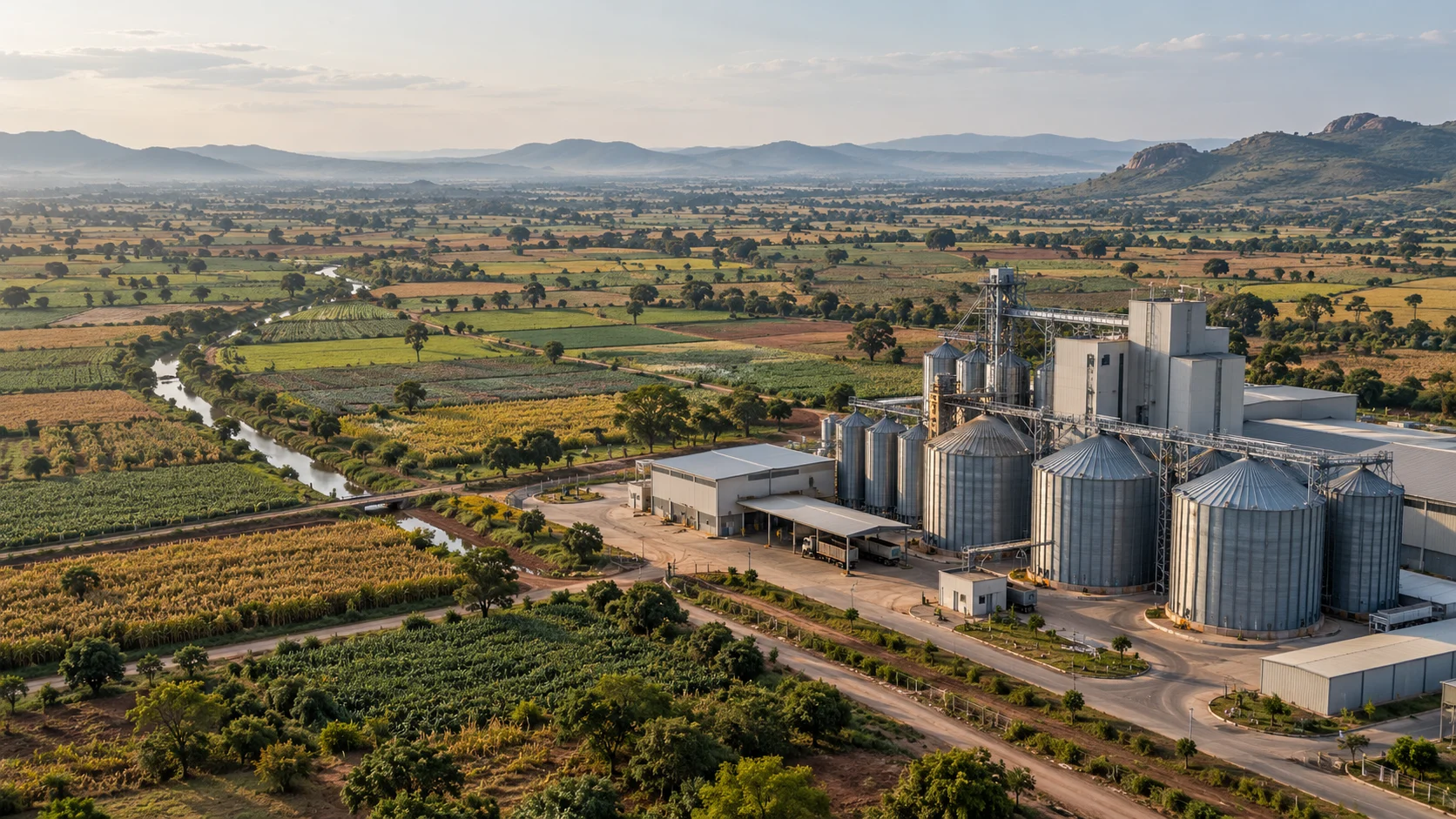
Processing plans depend on production across farms and sourcing zones that may span many locations. Meridian helps agribusiness teams understand how those landscapes are developing before supply reaches the facility.
LANDSCAPE / INSTITUTION / DECISION
01 / Institutional responsibility
Procurement, operations and investment teams must plan intake, manage sourcing relationships and assess where supply could be exposed. Contracted volumes and historic deliveries describe commercial arrangements; the production catchment provides a changing physical context.
02 / Visibility problem
A processor may know suppliers and expected delivery volumes while lacking a consistent view of moisture, vegetation and weather conditions across the farms or clusters behind them. Geographic concentration can amplify local shocks, and conditions may change well before arrivals at the gate reveal a shortfall.
The question is what the physical evidence adds to the institution’s existing record.
03 / Applications
01
Map the production areas that support a facility or procurement network.
02
Follow changing conditions across priority supply zones.
03
Identify dependencies on particular geographies or weather patterns.
04
Direct sourcing teams toward clusters needing local confirmation.
04 / Working method
Define facilities, suppliers and sourcing areas where known.
Review available in-season signals in the catchment.
Relate changing conditions to geographic dependencies.
Compare findings with supplier reports and procurement plans.
05 / Institutional outcomes
See conditions beyond the facility and contracted ledger.
Identify areas that merit direct supplier engagement.
Use physical context alongside commercial forecasts.
07 / Evidence boundaries
WHAT THIS EVIDENCE DOES NOT DETERMINE
Landscape observations do not establish a supplier’s actual harvest, contractual performance, commodity quality or a precise delivery volume. They help locate questions for procurement and field teams; commercial and operational records remain necessary.
DISCUSS YOUR INSTITUTIONAL QUESTION
Share the geography, assets and decision context. We can discuss what physical evidence is available and how it would be validated.