01
Origin context
Review land-use history and production conditions in declared sourcing zones.
SECTOR 05 / INSTITUTIONAL AGRICULTURAL INTELLIGENCE
Aggregation, warehousing and trade depend on what is produced upstream and where. Meridian brings production-origin and catchment context into decisions about sourcing networks and commodity flows.
LANDSCAPE / INSTITUTION / DECISION
01 / Institutional responsibility
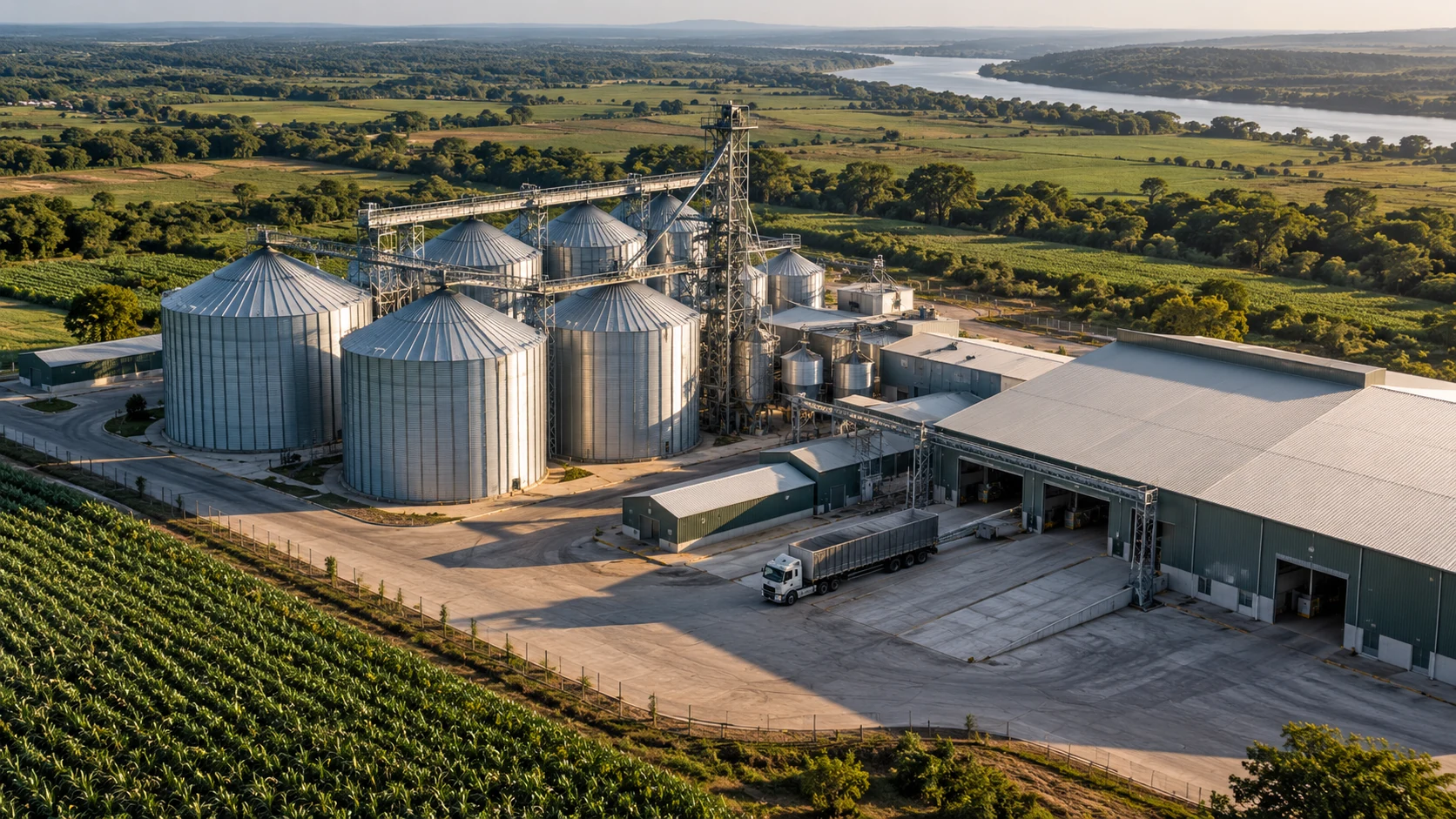
Aggregators, warehouse networks and exporters must understand sourcing areas, concentration, land-use context and the conditions affecting production. Movement and storage records remain central; landscape intelligence helps explain the agricultural system feeding them.
02 / Visibility problem
A trade commitment may be recorded at a facility while the production areas behind it are dispersed or incompletely mapped. Geographic shocks can affect several collection points at once. For origin-sensitive sourcing, a declared location needs supporting evidence and a clear chain of custody.
The question is what the physical evidence adds to the institution’s existing record.
03 / Applications
01
Review land-use history and production conditions in declared sourcing zones.
02
Map production clusters and geographic concentration.
03
Relate storage facilities to upstream production landscapes.
04
Examine where production and logistics dependencies intersect.
04 / Working method
Map known sourcing zones, facilities and movement corridors.
Examine land, weather and production conditions over time.
Identify concentration and potential changes across catchments.
Compare with procurement, inventory and traceability records.
05 / Institutional outcomes
See the geographic context behind sourcing declarations.
Understand concentration around facilities and corridors.
Direct documentary and physical checks where evidence is incomplete.
07 / Evidence boundaries
WHAT THIS EVIDENCE DOES NOT DETERMINE
A geospatial view cannot count bags inside a warehouse, establish current stock, verify commodity quality or certify shipment origin on its own. Inventory controls, weighing, custody records and physical verification remain necessary. Meridian provides upstream context and prioritisation.
DISCUSS YOUR INSTITUTIONAL QUESTION
Share the geography, assets and decision context. We can discuss what physical evidence is available and how it would be validated.